3 Jun 2026
Aligning Validation Protocols with Subscription Charge Sequences to Strengthen Defenses in Digital Merchant Billing Ecosystems
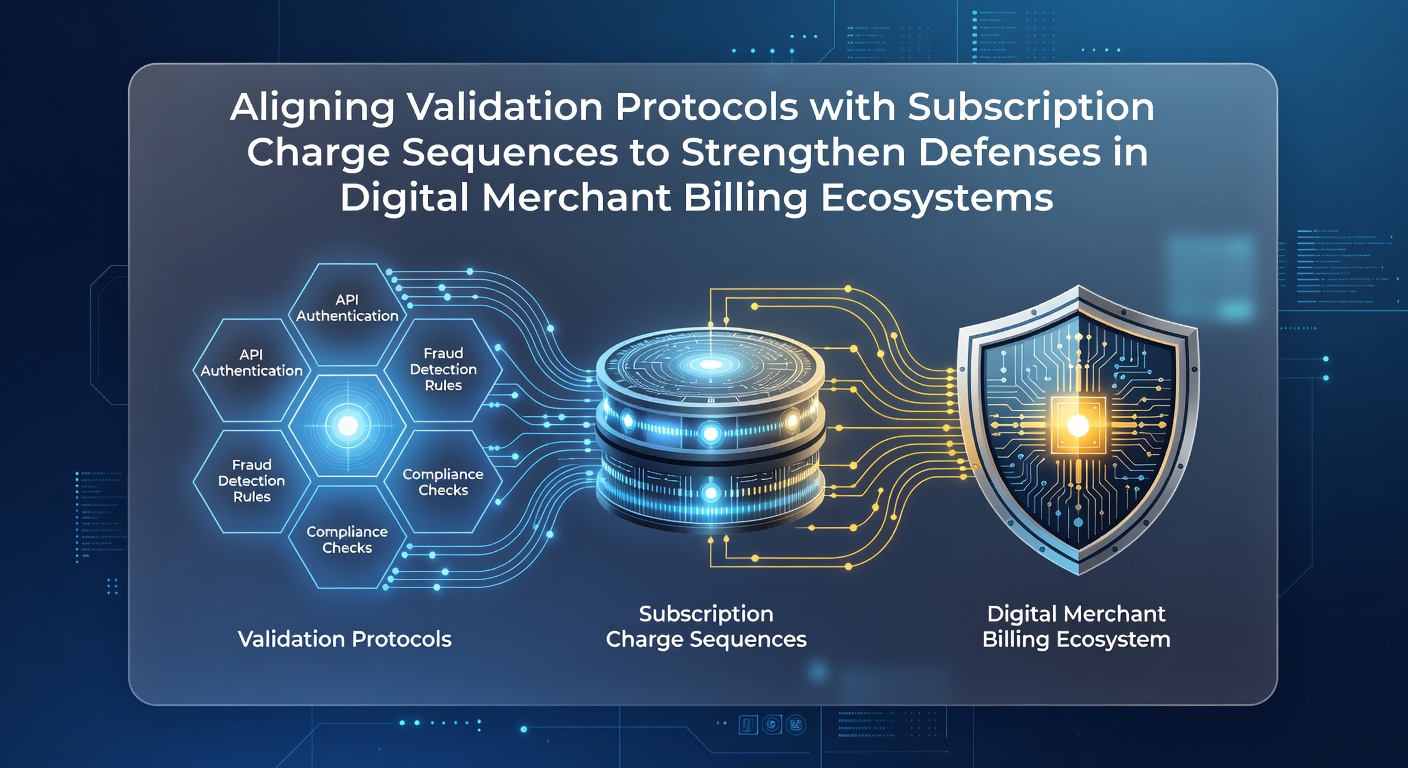
Digital merchant billing ecosystems rely on precise coordination between validation protocols and subscription charge sequences to maintain transaction integrity across recurring payment cycles. Observers note that these alignments create layered checks at each stage of authorization and processing, reducing exposure to mismatches that can occur when charge timing diverges from verification steps.
Core Components of Subscription Charge Sequences
Subscription charge sequences follow predictable patterns that include initial setup, periodic billing intervals, and renewal triggers, and each point in the sequence presents an opportunity for protocol application. Researchers at academic institutions have documented how these sequences operate within high-volume merchant environments, where thousands of recurring entries process daily through centralized gateways. Data from industry reports indicates that misalignment at any interval, such as a delayed validation during a renewal window, opens pathways for unauthorized activity to proceed undetected.
Validation Protocol Structures
Validation protocols encompass address verification, card authentication, and risk scoring mechanisms that activate before funds move. Those who study merchant operations find these protocols function most effectively when synchronized with the exact timing of charge sequences rather than applied uniformly across all transactions. In practice this means embedding verification calls at the initiation of a new subscription cycle and again at each renewal point, creating checkpoints that match the billing cadence.
What's interesting is how timing synchronization affects overall system resilience. Studies from European research centers reveal that protocols triggered too early or too late relative to charge dates allow discrepancies to accumulate, whereas aligned timing catches anomalies at the moment they arise. According to findings released by the Financial Consumer Agency of Canada in June 2026, merchants who adjusted their validation triggers to match subscription intervals recorded measurable reductions in processing exceptions over multi-month observation periods.
Integration Methods in Practice
Merchants achieve alignment through configuration of billing platforms that link validation rules directly to sequence events. One study revealed that when validation occurs at the precise moment a charge sequence advances to its next stage, systems can cross-reference historical customer data against current inputs without introducing delays. This approach supports continuous monitoring while preserving the flow of legitimate recurring payments.
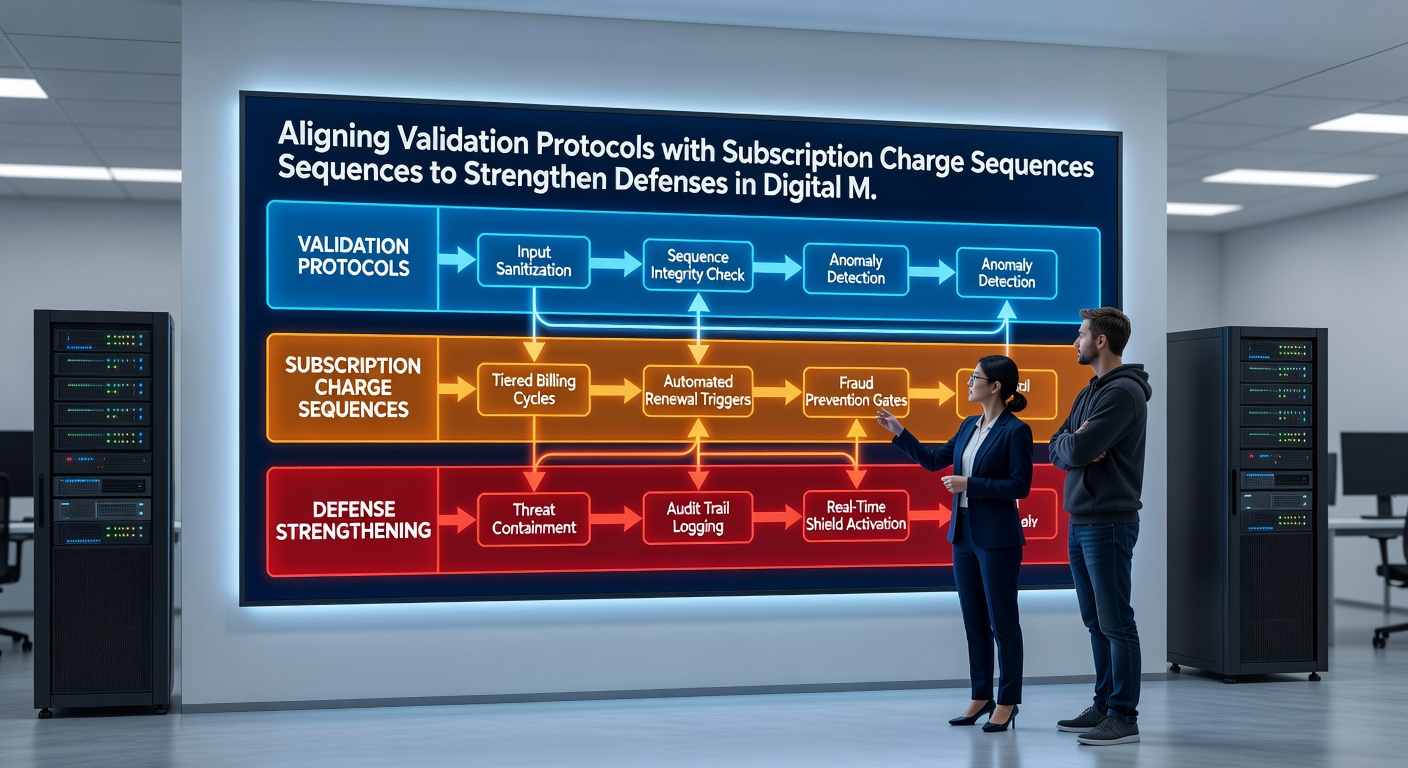
Experts have observed that certain platforms allow rules to be set so validation intensity scales with sequence milestones. For instance, a first-time charge might invoke full authentication layers, while subsequent renewals apply lighter checks calibrated to prior approval patterns. The reality is that this graduated method depends on accurate sequence mapping to prevent either over-validation that frustrates customers or under-validation that leaves gaps.
Defensive Outcomes from Coordinated Approaches
Coordinated validation and charge sequences contribute to stronger defenses by limiting the window during which fraudulent entries can complete processing. Figures from regulatory bodies in Australia show that ecosystems employing such coordination experienced fewer instances of repeated unauthorized attempts within the same billing cycle. Observers note that the key lies in consistent rule application across all sequence points rather than selective enforcement.
Take one merchant operation that integrated protocol triggers with each renewal date: system logs demonstrated that anomalies surfaced earlier in the sequence, allowing intervention before multiple charges accumulated. Data released by the European Central Bank highlights similar patterns across monitored payment networks, where timing alignment correlated with improved detection rates during 2025 and into 2026.
Technical Considerations for Implementation
Implementation requires mapping each subscription interval to corresponding validation events within the merchant's processing software. This mapping uses event-driven triggers that activate verification modules automatically as charges approach. Researchers discovered that platforms supporting flexible rule engines enable merchants to adjust validation parameters without disrupting ongoing sequences, preserving operational continuity while enhancing protective measures.
Yet challenges arise when legacy systems lack native support for granular timing controls. In such cases, middleware solutions bridge the gap by intercepting charge sequence data and routing it through validation layers at the required moments. The ball remains in the court of system providers to offer built-in capabilities that reduce reliance on additional layers.
Conclusion
Alignment between validation protocols and subscription charge sequences forms a structural element in digital merchant billing defenses. Evidence from multiple regions demonstrates that synchronized timing supports earlier detection and limits the progression of irregular activity through recurring cycles. As billing ecosystems continue to evolve, the precision of this alignment remains central to maintaining transaction security across diverse merchant environments.